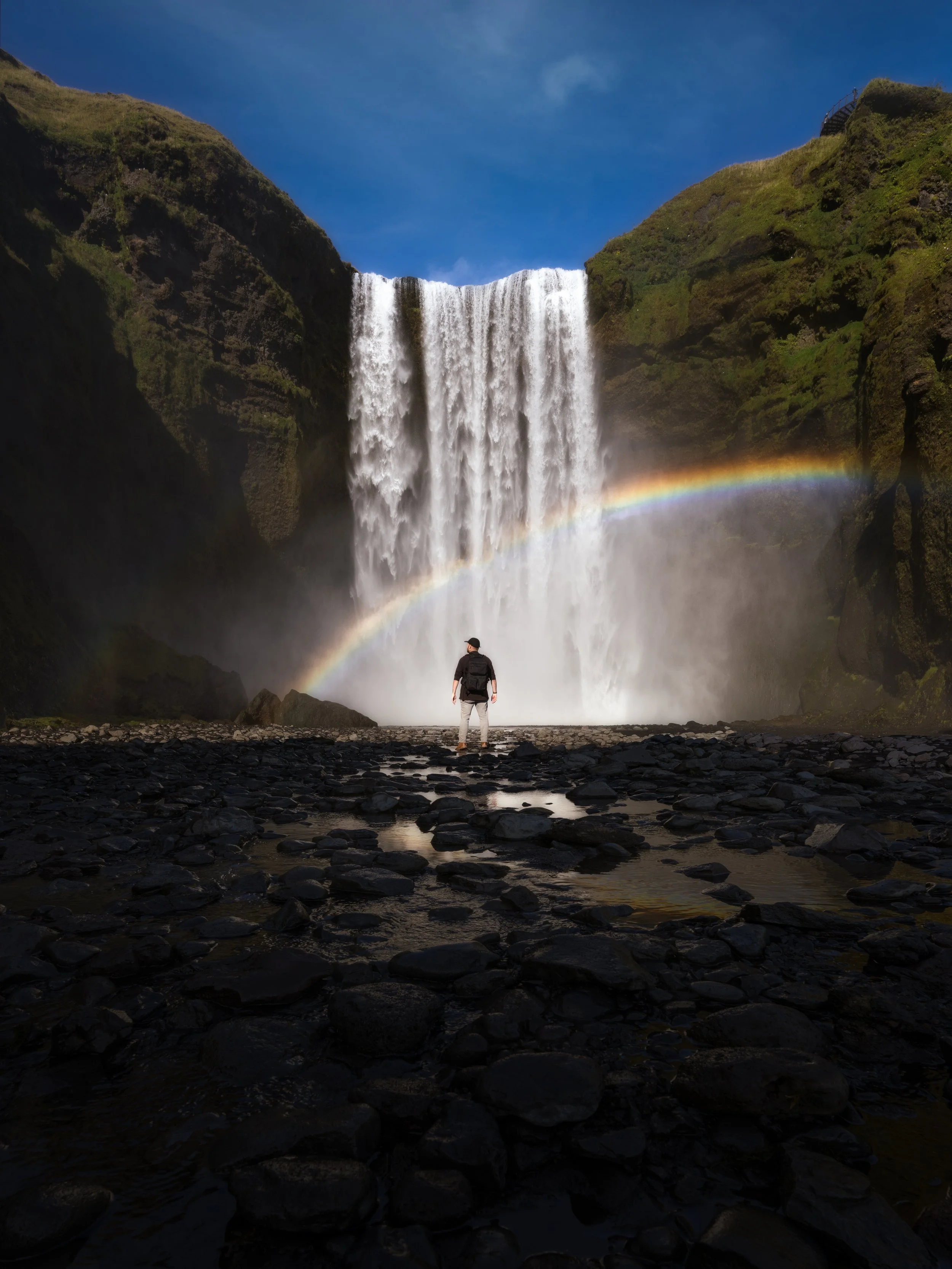
The Essential Tools That Elevated My Trip to Iceland
Iceland doesn't give you time to get your bearings. In four days of solo travel, I went from waterfalls throwing rainbows in every direction, to glacial lagoons crowded with floating ice, to a black sand beach where the wind seemed personally offended by my presence. I came home with some of my favorite images I've ever made, and none of it would have been as smooth without a few core tools quietly doing their jobs. Here's how each one played a role.
Before I capture the first frame, I take a quick look at logistics. I landed in Keflavík on a Friday morning, picked up my rental, and had exactly one backpack to cover everything. My first night was spent sleeping in that car at a campsite near Skógafoss, which I wouldn't call glamorous, but it put me a short walk from the first location on my list. And when you're covering this much ground in just four days, every item in the bag has to earn its spot. Courtesy of my Cityscape 2.0 Backpack, I managed to pack the following kit:
Sony A7RV
Sony A7SIII
Sony 16mm f/1.8
Tamron 28-200 f/2.8-5.6
Sigma 28-105 f/2.8
Sigma 100-400 f/5-6.3
16in Macbook Pro
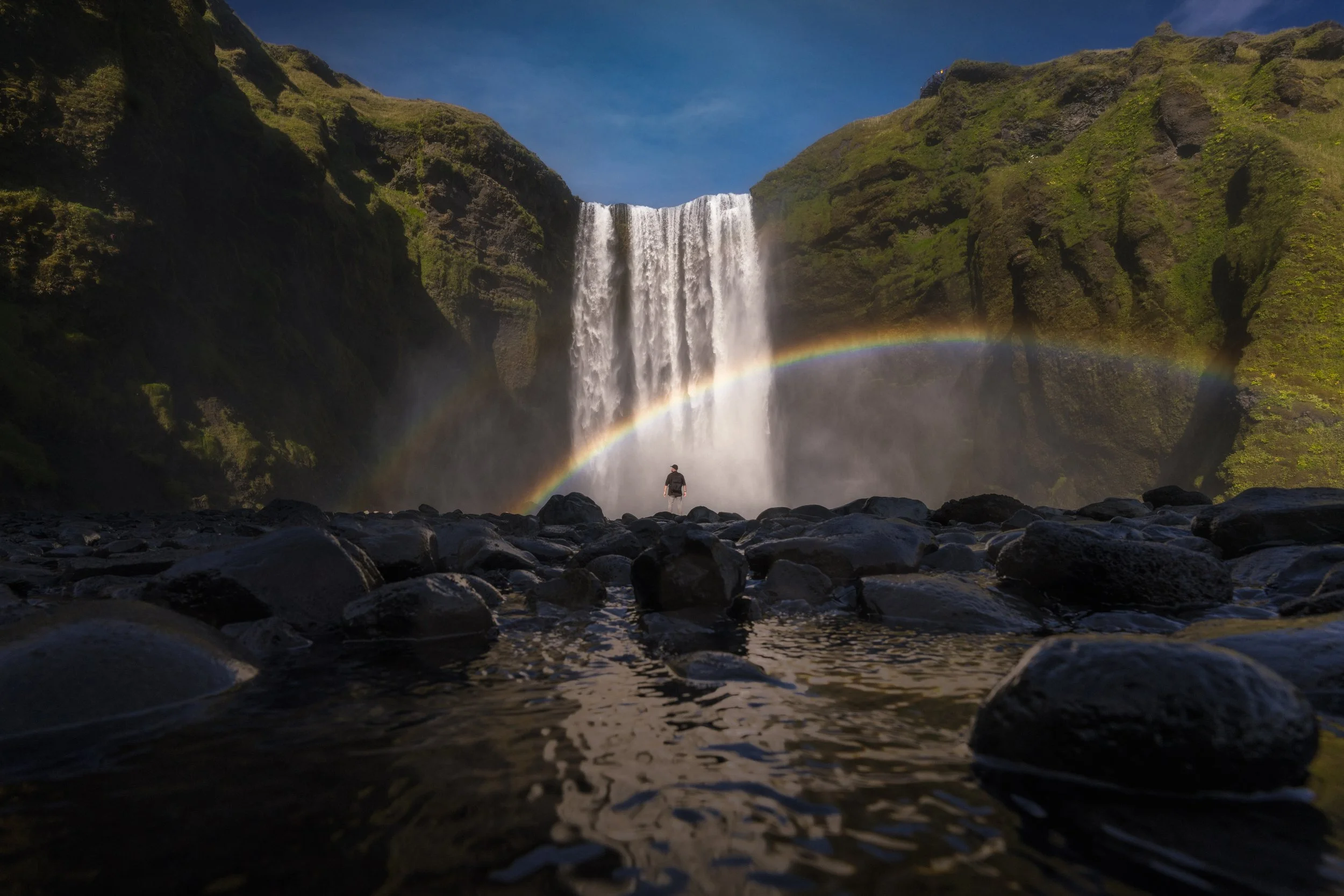
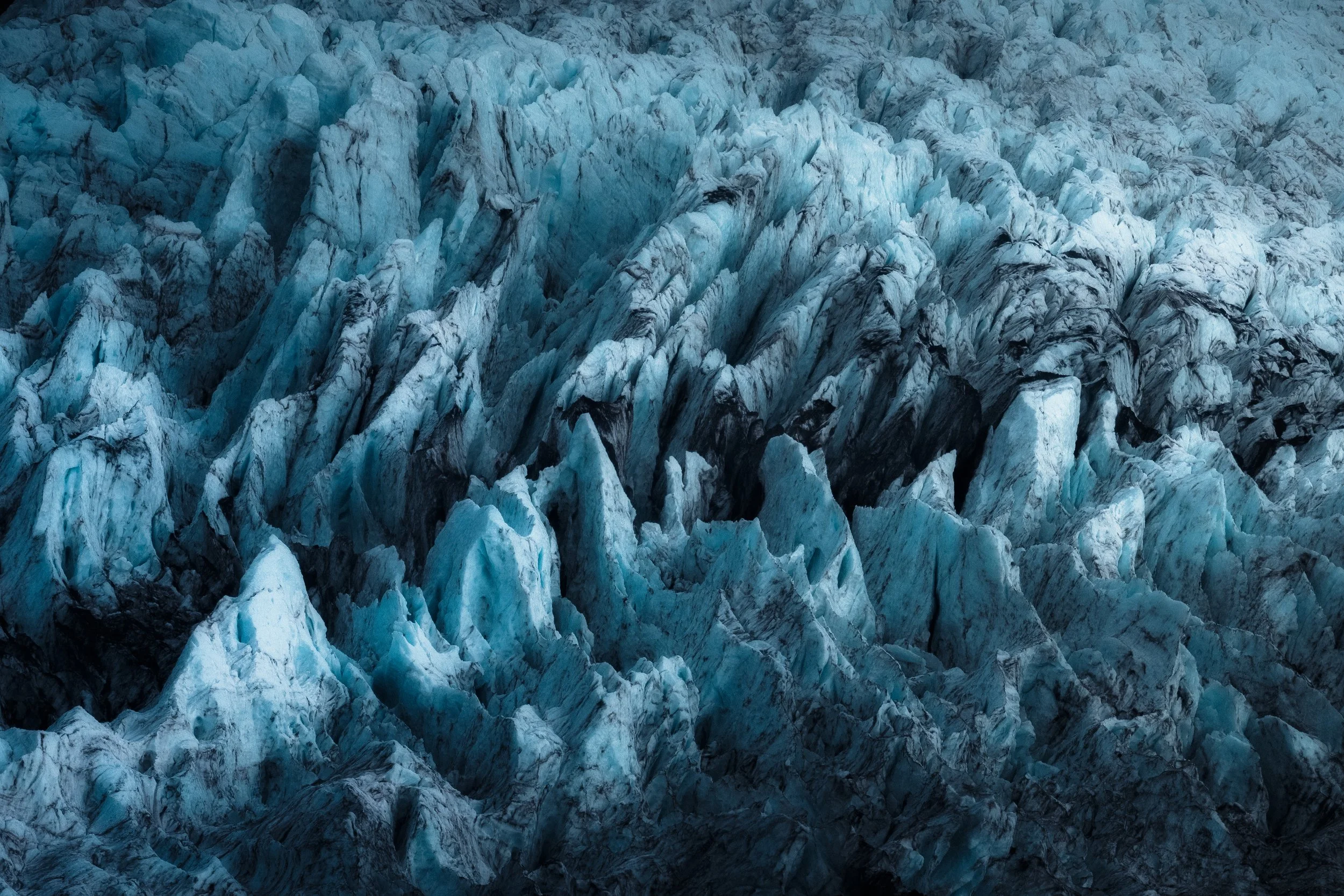
Skógafoss is where the HGX Prime CPL proved itself. Waterfalls in Iceland create a unique problem: constant spray, soaked basalt, and reflective water all throwing glare back at your lens. By rotating the polarizer, I was able to cut through that glare and bring the rock back to a deep, dark tone, while the moss turned the rich green it actually was in person. It also let me control the highlight of the scene: the rainbow. Rainbow light is polarized, so a slow rotation lets you strengthen it or make it disappear, and watching it change in real time is one of the more fun moments you'll have behind a camera. I used the same approach later at Fjallsárlón, where cutting reflections off the water let the blue of the ice come through.
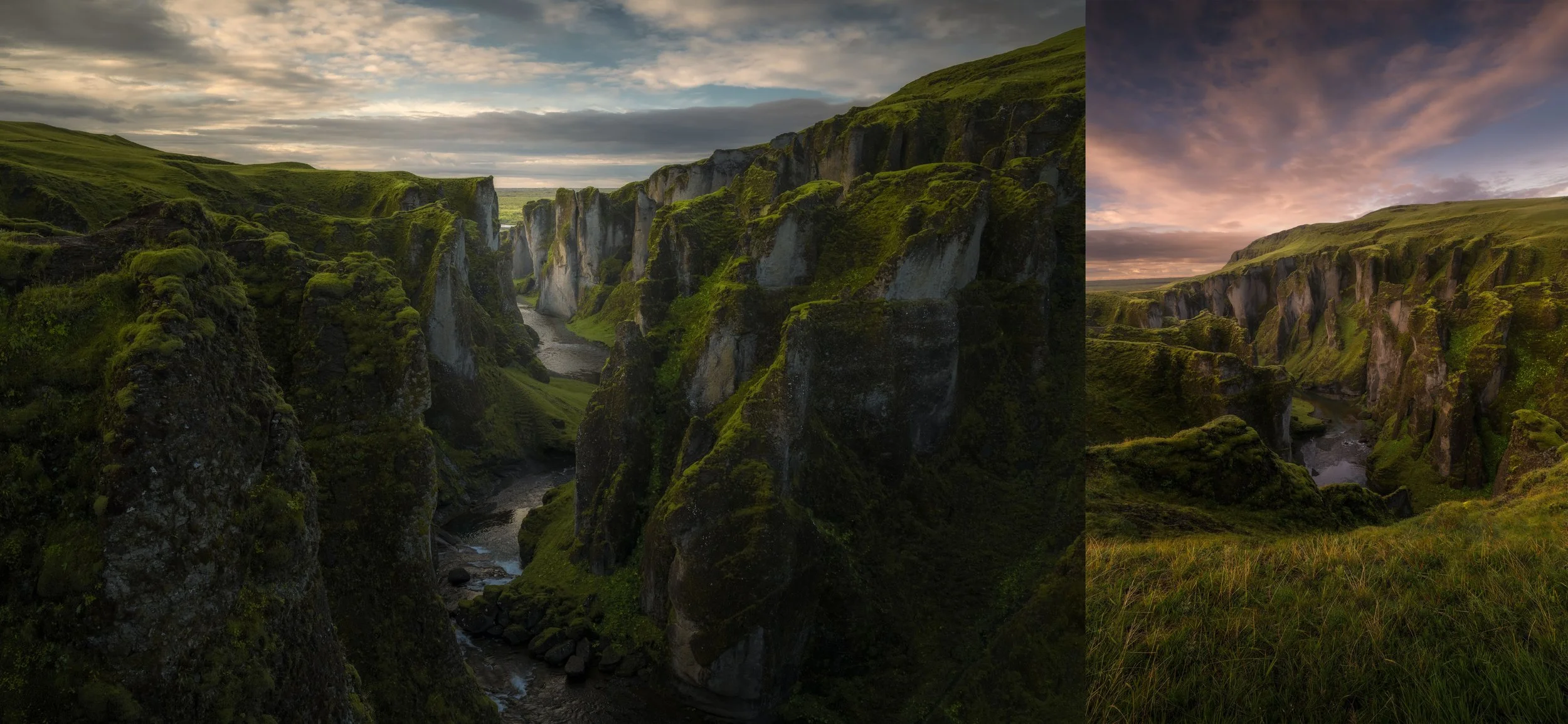
The next morning, I was at Fjaðrárgljúfur for sunrise, and this is where the L-bracket earned its place in the bag. Light at a canyon like this changes every couple of minutes, and the best composition one minute can be vertical and the next horizontal. Instead of re-rigging the camera on the tripod, I could flip between orientations in seconds without losing my spot or my framing. That's the difference between catching a shaft of light as it moves across the canyon wall and watching it pass while you fumble with a plate. For this one, it was wanting to get the perfect scene down the canyon, but then also capturing the morning light against the clouds. Quick swapping for moments like this was the game changer.
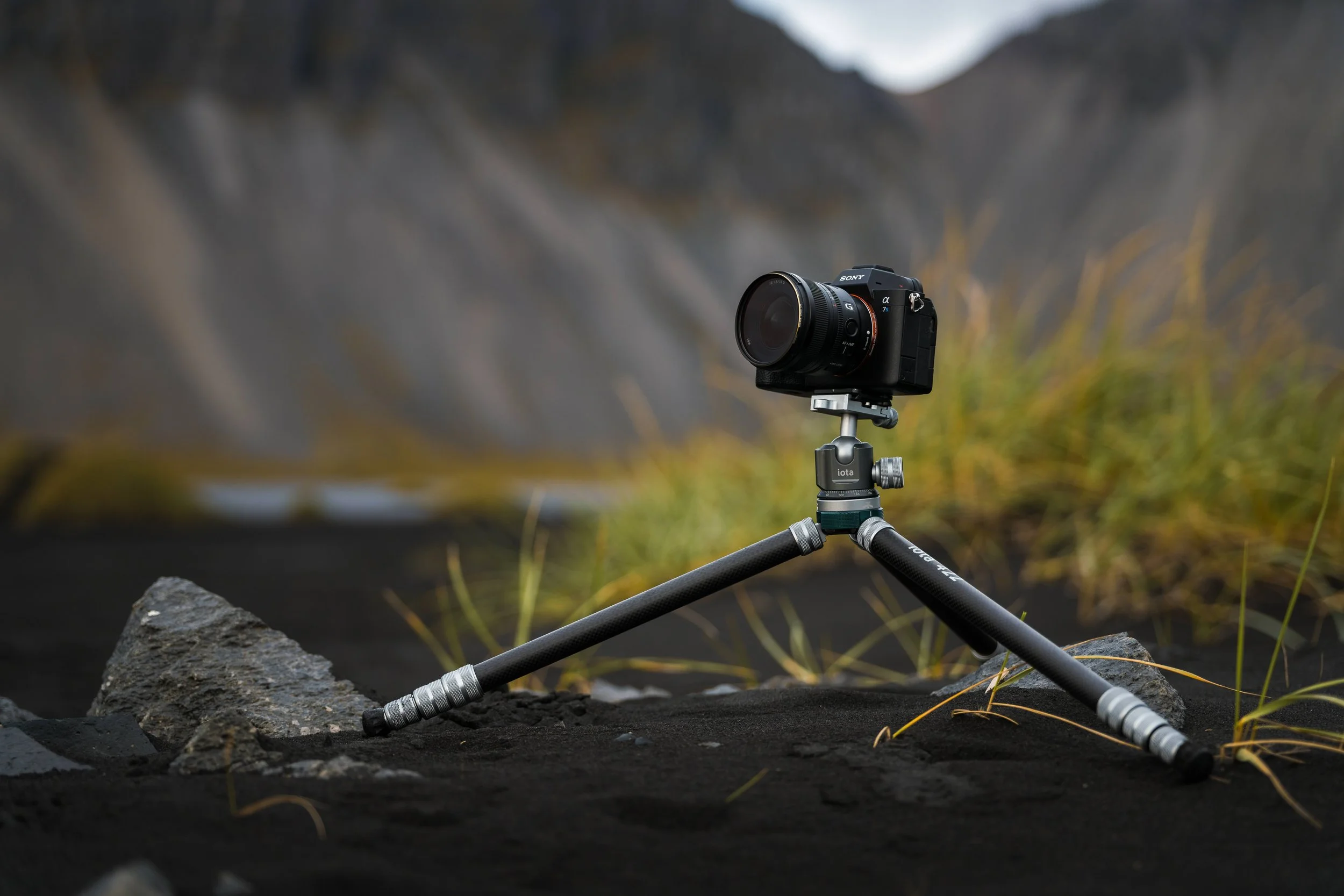
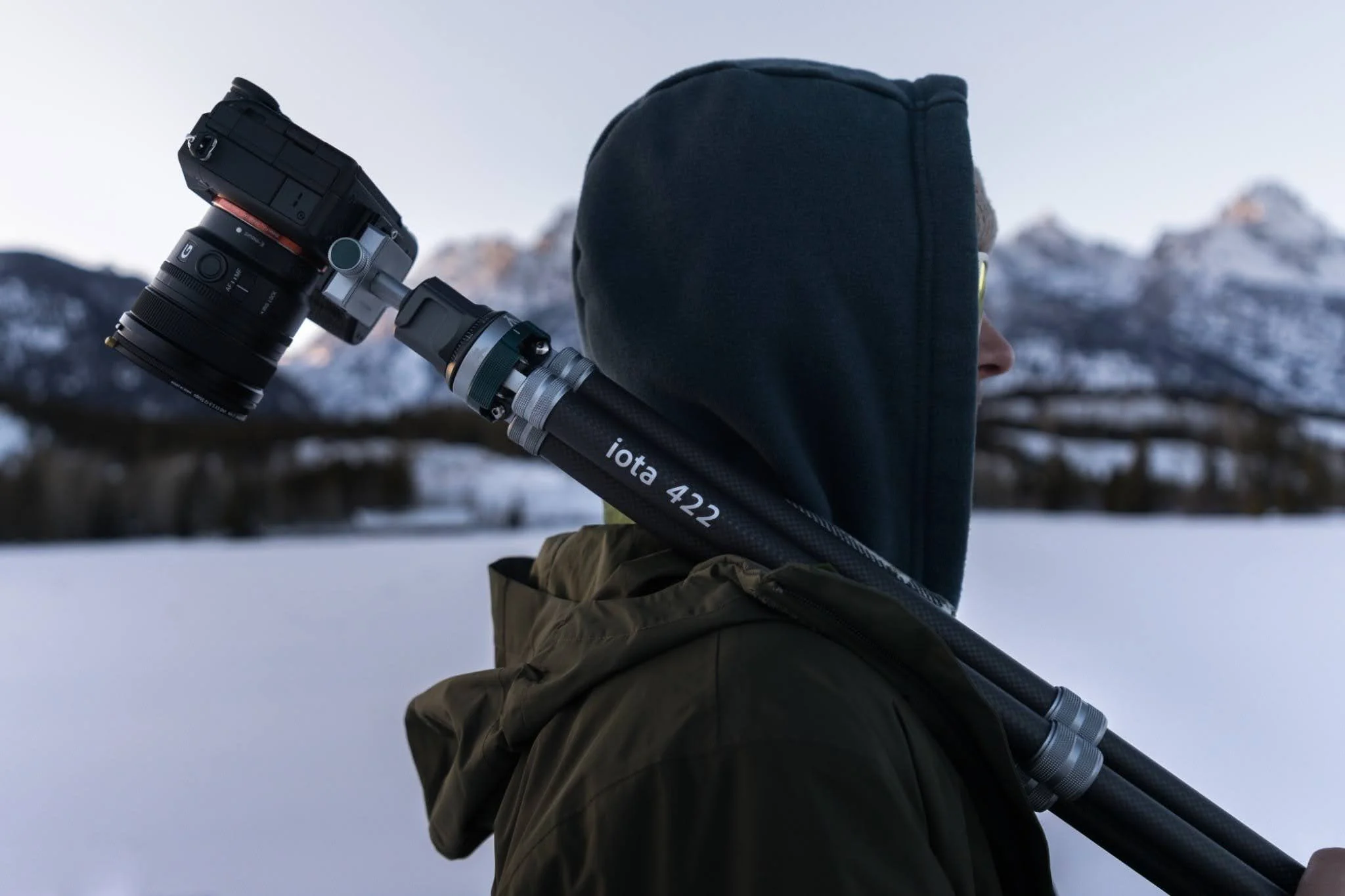
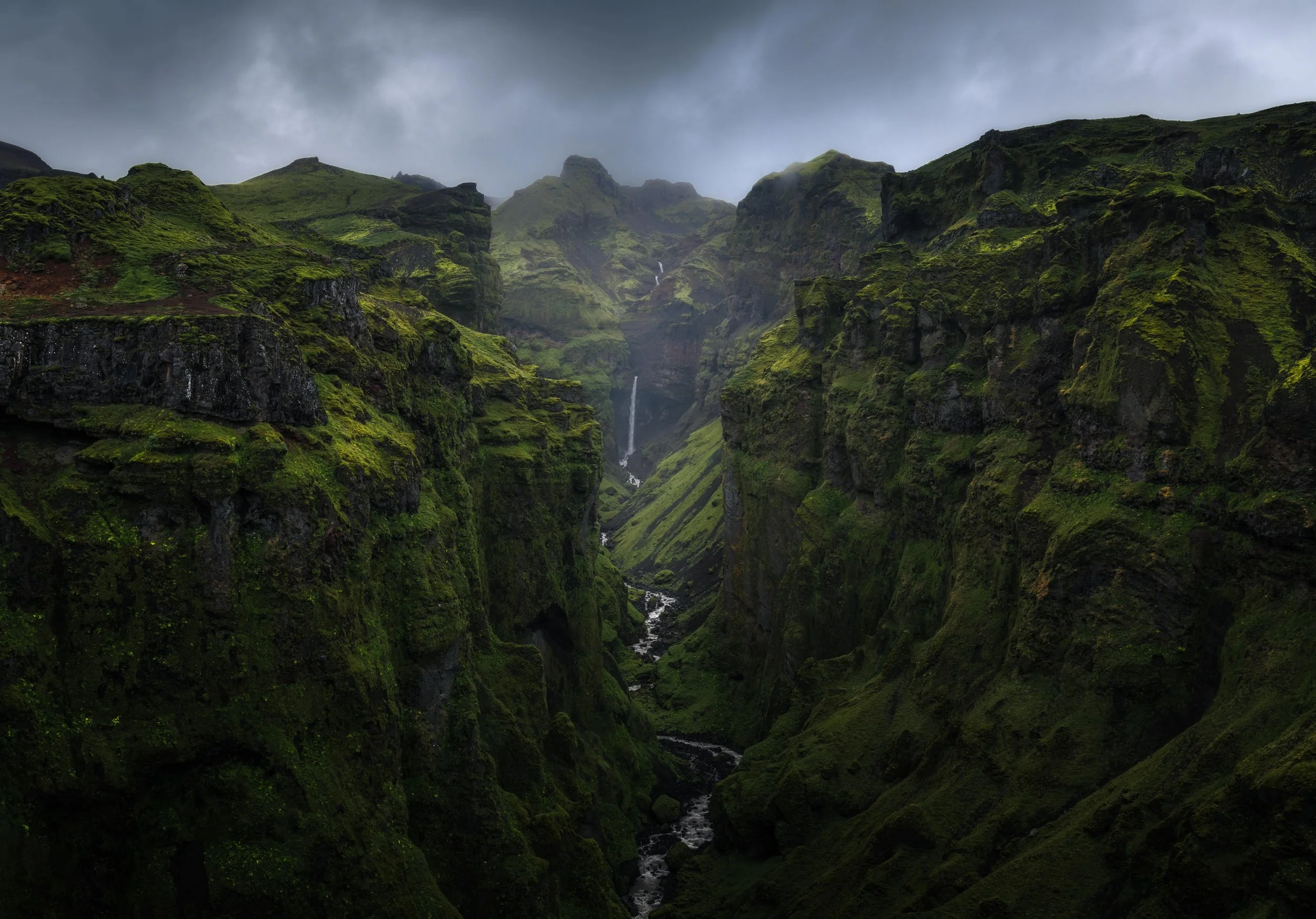
Later in the trip, the hike to Múlagljúfur is where the iota 422 tripod made the case for itself. It's a real hike, and I was carrying camera gear on my back the entire way. Thankfully, the iota is light enough at 1 lb 11 oz that I never had to debate bringing it, which matters more than most people admit. One of my beliefs is that the best tripod is one that you almost forget you have. The result, however, is exactly why you want one there.
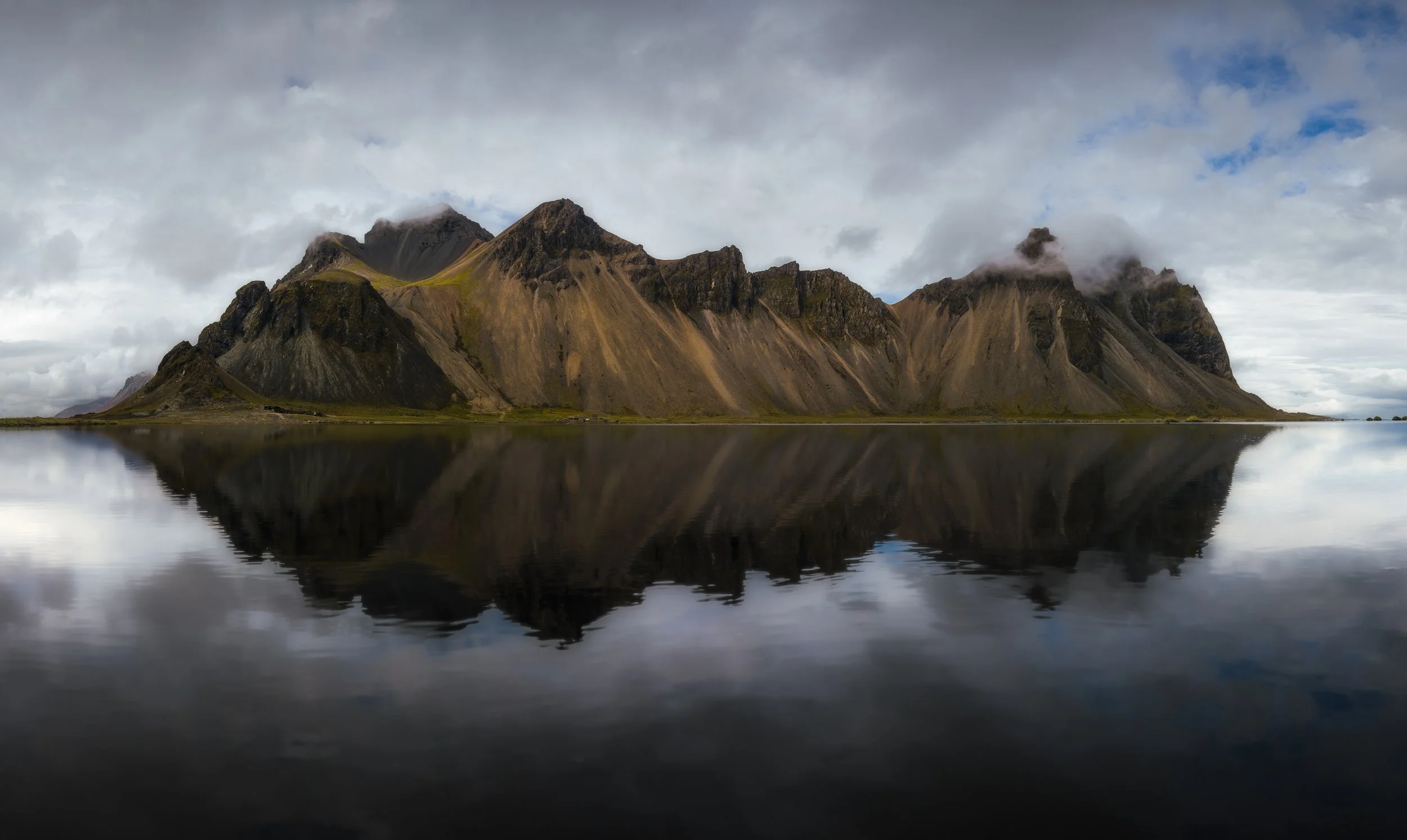
Then came Vestrahorn, where the wind decided to be part of the composition. Black sand beaches don't offer much cover, and long exposures don't tolerate a tripod that shakes. This is where the Epoch tripod stepped in. It stayed securely planted in the occasional gusts, and the four-way head let me make small adjustments to my framing without undoing the entire setup. To add to the final shot here, I also used my HGX Prime VND filter to establish a wide shot of the entire scene with some smoother water. Even in the midst of occasional gusts, the shot remained stable and sharp. It's one of my personal favorites from the entire trip.
Through all of it, one thing never crossed my mind: the storage solution I was using. Instead of my usual Rugged 128GB UHS-II SD Cards, I opted for my 480GB CFExpress Type A Card. Four days of nonstop spray and pray shooting meant I never had to swap my card once.
Looking back at the route, I covered a lot of ground in a short window, from waterfalls to ice to wind-battered beaches, all with a kit that never slowed me down. The HGX Prime CPL turned glare into color and let me play with rainbows. The L-bracket kept up with fast-changing light. The iota made the hike easy, Epoch held steady when the wind didn't, and my Cityscape 2.0 Backpack carried everything with ease.
If you're packing for Iceland, bring gear that gets out of your way. The weather shifts by the hour, the light rarely waits, and the best locations often sit at the end of a long hike or a winding stretch of the coast. Choose a kit you can trust and carry without a second thought, and pack light enough that you never leave something behind because it feels like too much. The less you think about your equipment, the more you notice what to capture. For me, that meant more time revisiting one of my favorite places on earth, capturing some of the most epic scenes I've ever witnessed.

Charlie Kruschek
Landscape photography is Charlie's true passion, chasing everything from storms to sunrises. Standing humbled before nature's raw power and in awe of the world's subtleties, Charlie's goal is to preserve heart-skipping moments of natural light, focusing on an emphasis of time. Charlie attempts to share his imagery as a method of inspiring others to appreciate life's beauty through a different optic and the fragility of each second.