Capturing Lightning with the Epoch Tripod
After nearly a decade of chasing storms, I’ve learned that photographing lightning isn’t as much luck as it is preparation. The storm photographers who consistently come home with great lightning images aren’t chasing random storms and hoping for the best. They’re setting themselves up for success before the first bolt ever touches the ground, starting with positioning, equipment, and experience. Here’s how you can prepare for the next time the sky lights up with sparks for you and your camera to capture.
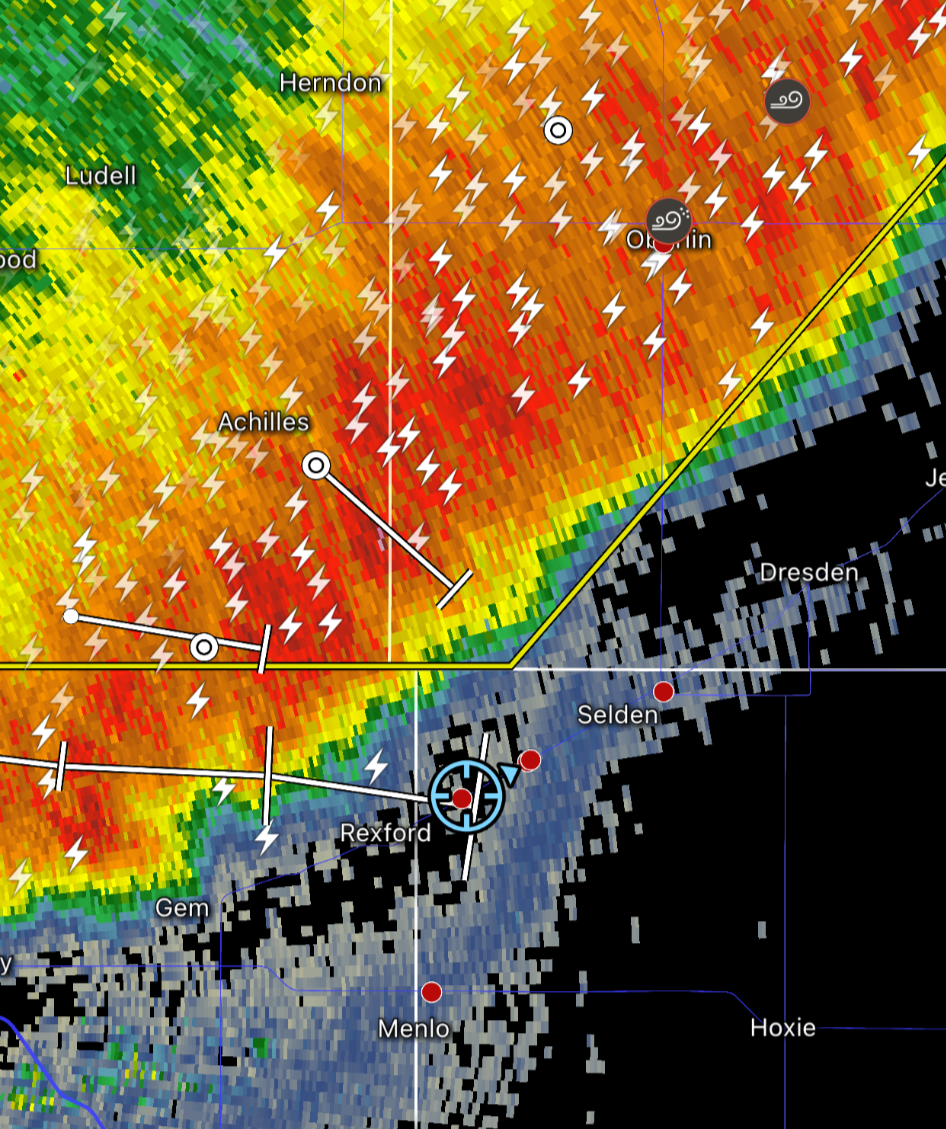
Not every thunderstorm produces photogenic lightning. I generally look for isolated supercells or slow-moving thunderstorms with frequent lightning signatures on radar (my go-to app is RadarScope). In addition to watching for these signatures on radar, knowing where a storm is moving gives time to scout compositions instead of scrambling once the lightning starts. Most importantly, it helps you stay safe. If lightning is directly overhead or the storm is moving toward your location faster than you anticipated, it’s time to move. No photograph is worth putting yourself in danger. Trust me, I learned this the hard way.
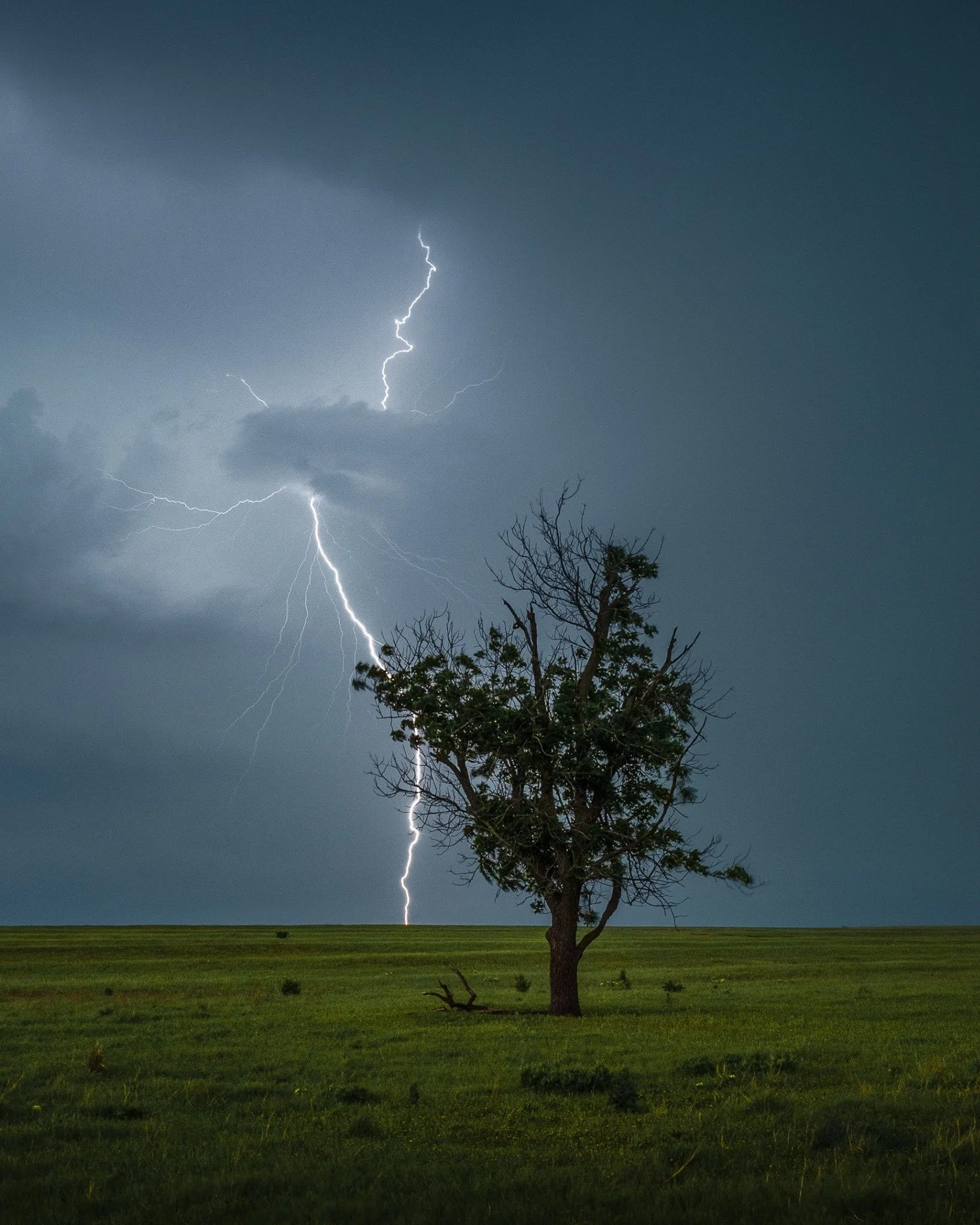
Once I’ve found a safe location, composition becomes the priority. Think beyond lightening: a lone tree, an old barn, a mountain range, or even an interesting stretch of prairie can give the viewer something to connect with beyond the bolt itself. I like to compose wider than I think I’ll need because lightning rarely strikes exactly where I expect it to, so giving yourself room in the frame dramatically increases your odds of capturing a well-balanced image.
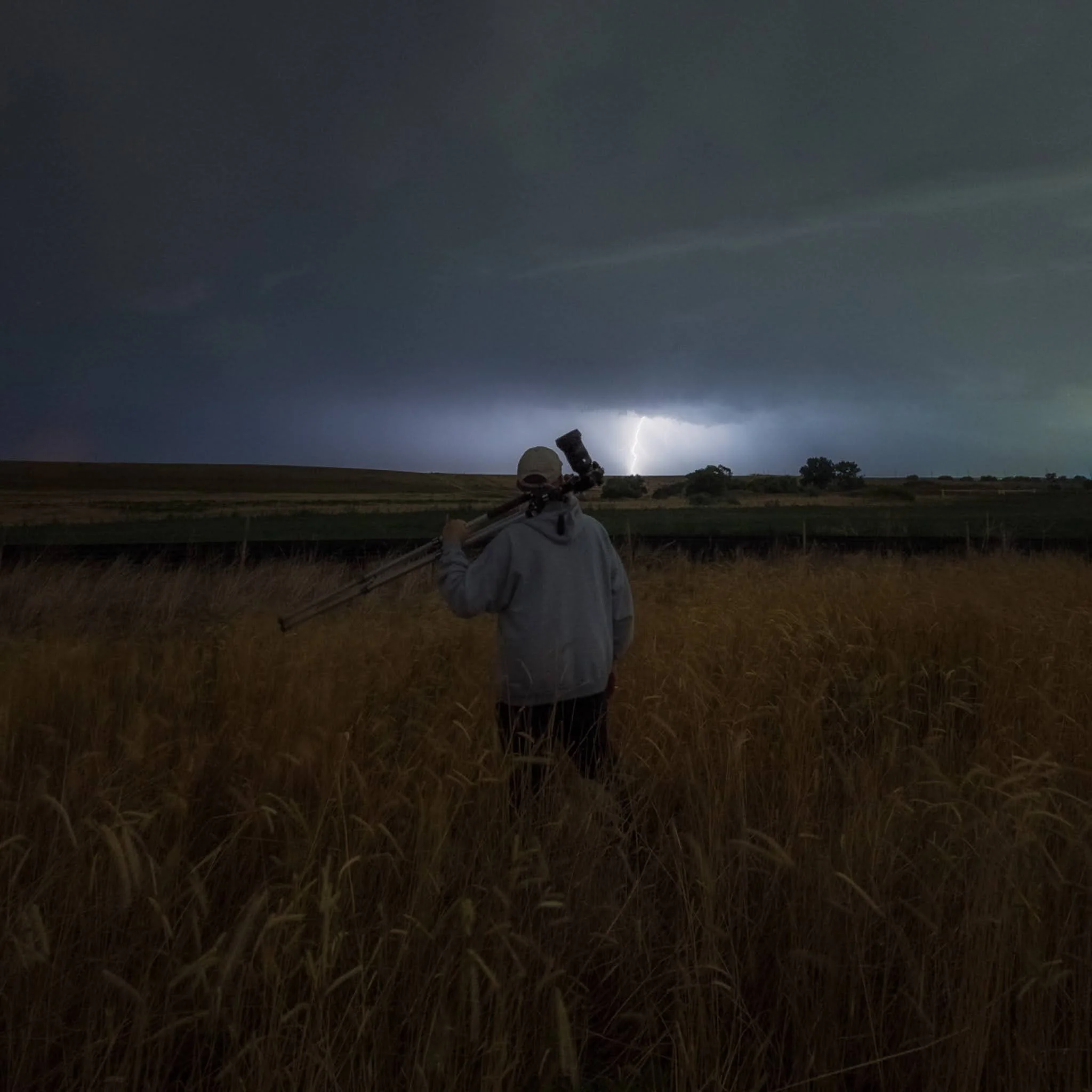
This is also where a sturdy tripod becomes essential. Long exposures and changing weather don’t mix well with flimsy support. Strong winds often arrive before the rain, and even small vibrations can soften an otherwise incredible photograph. I’ve been using the Epoch tripod because it stays remarkably stable in windy conditions while giving me precise control over composition. The four-way head is especially helpful when fine-tuning framing with a distant foreground subject. Instead of readjusting everything after each movement, I can make small, micro-adjustments until the composition is exactly what I want it. When you’re waiting several minutes for a single lightning strike, knowing your camera hasn’t shifted is one less thing to worry about.
Now obviously, when it comes to photographing storms, you can expect all types of unexpected elements to complicate your shots. This can range from heavy rain, dust, strong winds, and even hail. It’s important to keep your lens in mind when in these conditions. This includes using your lens hood at all times, and constantly checking the front element with an air blower and microfiber cloth to keep any rain drops from ruining your shots. One extra layer of caution to keep your gear safe is having a protective filter in place on the lens to repel the vast majority of unwanted elements. I never take mine off when chasing. Never.
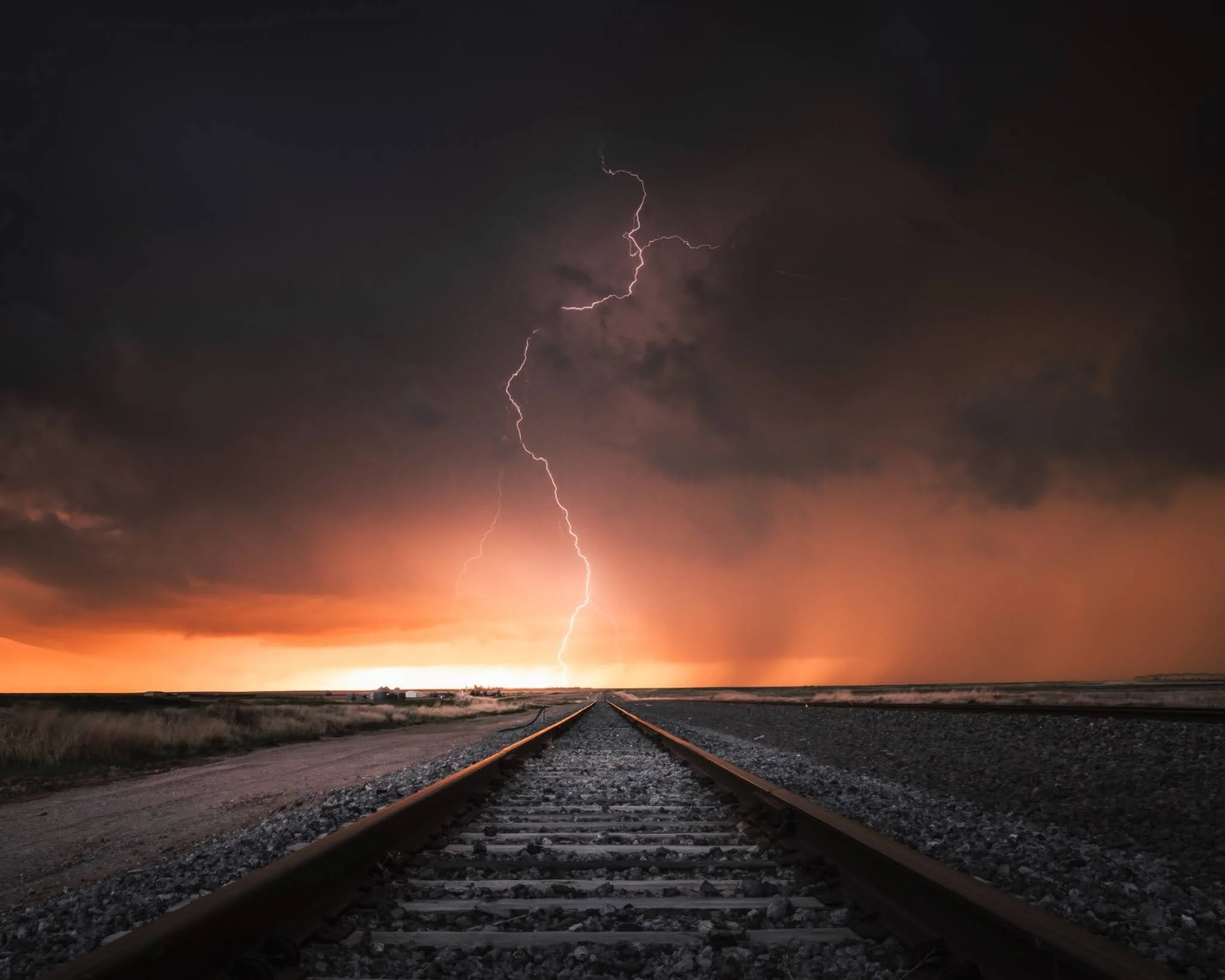
Regarding settings, this will vary depending on how bright the storm is, but my starting point is usually ISO 100, an aperture between f/8 and f/11, and shutter speeds ranging anywhere from 5 to 30 seconds after sunset. During the day, long exposures become much more difficult because of the amount of available light. That’s when my HGX Prime VND filter becomes the key tool. A variable ND filter reduces the amount of light entering your lens, allowing you to extend your shutter speed even in bright midday conditions. Longer exposures dramatically increase the chances that a lightning strike will happen while your shutter is open, rather than between exposures. For daytime exposures with my HGX VND attached, my settings are usually ISO 100, f/13, and 5 seconds.
Now that we have our settings dialed in, one piece of the puzzle that’s often overlooked is focusing. Even if I’m shooting at an F-stop beyond f/8, making sure focus is dialed in is key. My best practice for this is switching to manual focus and locking somewhere on the horizon of my scene. At night, however, I will also use the focus magnifier and find a distant cell tower, wind turbine light, or something far off into the distance and mark my focus at infinity. This assures that more likely than not, the lightning won’t just be sharp, it will be tack sharp.
An additional little cheat code to maximize your luck with capturing lightning is interval shooting. Some cameras have this built in, however having a remote shutter with an intervalometer makes this a breeze for letting your camera capture as many exposures as you want even if you’re not standing right in front of it. I’m often letting my camera capture 400 shots in one full sequence, and my usual “hit” rate is somewhere in the range of 4-8 keepers.
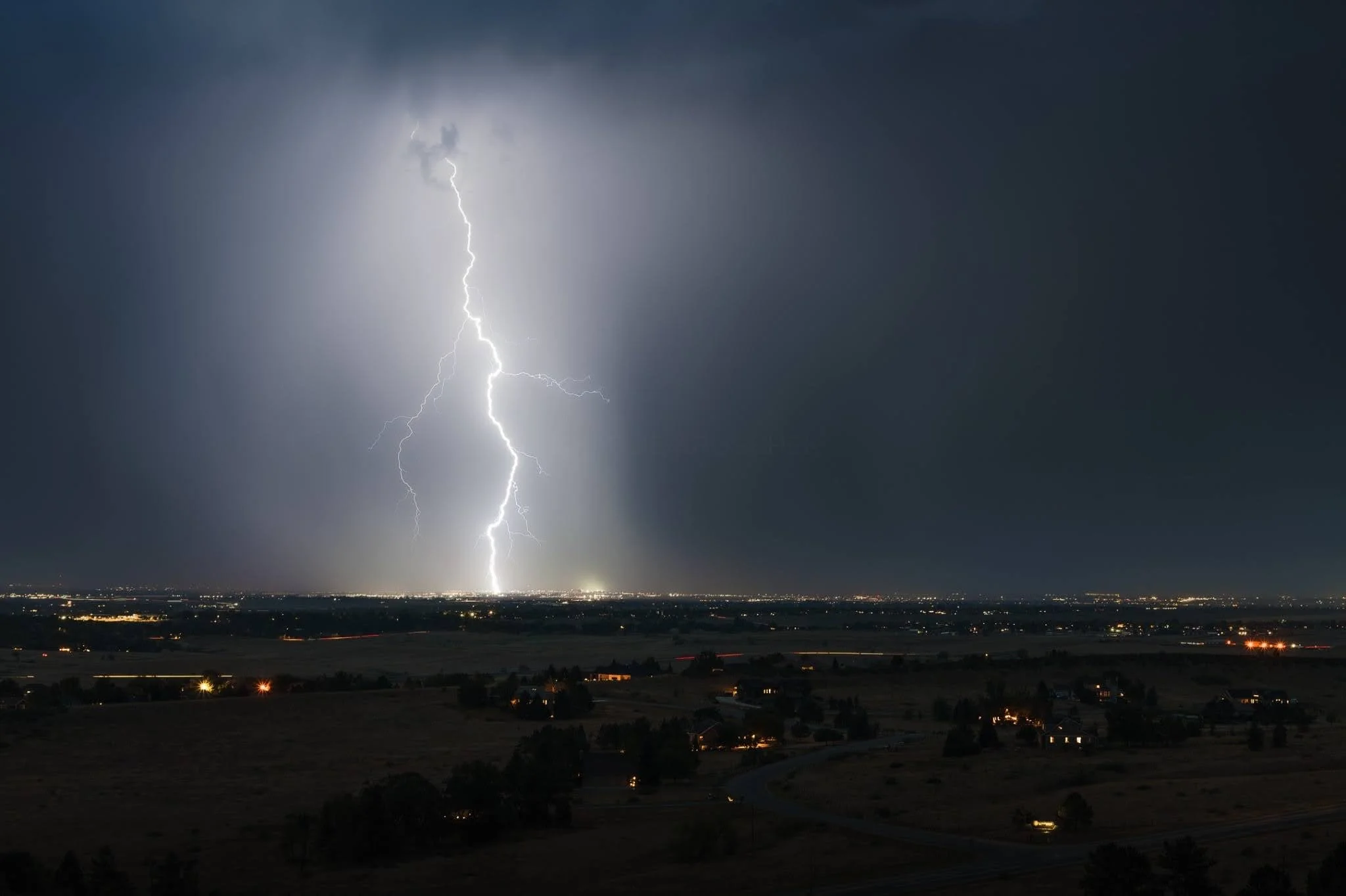
The biggest mistake I used to make is packing up too early. Storms often produce their best structure and most dramatic lightning after the heaviest precipitation has passed, so if you’re safely positioned outside the core of the storm, those final twenty or thirty minutes can produce incredible opportunities. Some of my favorite lightning images have happened when I was convinced the show was over. Patience is often rewarded.
Lightning photography is unpredictable, and that’s exactly why I enjoy it so much. You can’t force a strike or recreate the moment later. Every successful image represents good planning, better gear, solid technique, and a little cooperation from Mother Nature. If you spend time learning storms, prioritizing safety, and building a reliable setup around stable support and long exposures, you’ll dramatically improve your chances of capturing the kind of lightning images that keep you coming back for the next storm.

Charlie Kruschek
Landscape photography is Charlie's true passion, chasing everything from storms to sunrises. Standing humbled before nature's raw power and in awe of the world's subtleties, Charlie's goal is to preserve heart-skipping moments of natural light, focusing on an emphasis of time. Charlie attempts to share his imagery as a method of inspiring others to appreciate life's beauty through a different optic and the fragility of each second.